Dear Friends,
“I know this might sound weird, but does any of this give you hope for the future?”
A friend and I were talking about the war in Israel, the uptick in antisemitism here in America, threats to democracy, and other existential challenges when she asked me this powerful question.
I paused for a moment before responding, and the first thing that came to mind was Rabbi Jonathan Sacks’ definition of hope, which he learned from what he called “the great mistranslation” in this week’s Torah portion.
As we begin the Book of Exodus, we find the Israelites enslaved to a new Pharoah who has made horrific and violent decrees against them. They cry out from the burdens of their suffering in what appears to be a moment of total despair.
From a textual juxtaposition, it is as if their despair sets in motion the birth of its complete opposites: possibility, human agency, and hope. Only three sentences after the Hebrew slaves cry out, Moses encounters God in the famous scene at the burning bush. Here, Rabbi Sacks teaches, is the key to understanding one of the Hebrew Bible’s greatest contributions to humanity and the world.
I still remember watching Cecil B. DeMille’s The Ten Commandments with my father. From the film, I learned the common translation of God’s words to Moses at the burning bush: “I am that I am.” As powerful as this line is in the movie, it is inaccurate. In fact, the actual Hebrew phrase “ehyeh asher ehyeh” means, “I will be what I will be.” It is in the future tense.
This has profound implications for our understanding of God, the world, and ourselves. God is a God of becoming, a God of not yet, a God of possibility. In a radical challenge to traditional worldviews at the time, God tells us that the future is not determined by the past, transformation and change are possible, and the world can be different tomorrow than it is today. We are not bound by fate to live out a predetermined destiny. We are free to choose, and thus have a role to play in determining the not-yet-decided outcomes of our lives and our world.
This, according to Rabbi Sacks, explains the difference between hope and optimism. Optimism means looking at reality and believing it is better or will get better than it currently is. Hope is seeing reality for what it is but believing that the world can be different and better tomorrow than it is today, and that we have a role and responsibility to play in making that happen.
Which brings me to my friend’s question. I feel unsure and concerned about what the future holds for Israelis, Palestinians, and their entire region; for American Jews; and for liberal democracy here in this country and around the world. But times of profound brokenness, like the opening of the Book of Exodus, remind us of the possibility of transformational rebuilding and repair, and that is a message of hope in which I passionately believe.
This is a serious moment in time, and it is our moment to imagine a better future and to stay hopeful about the possibilities that lie ahead. As we begin 2024, I look forward to building that future together with all of you.
Shabbat Shalom,
Marc
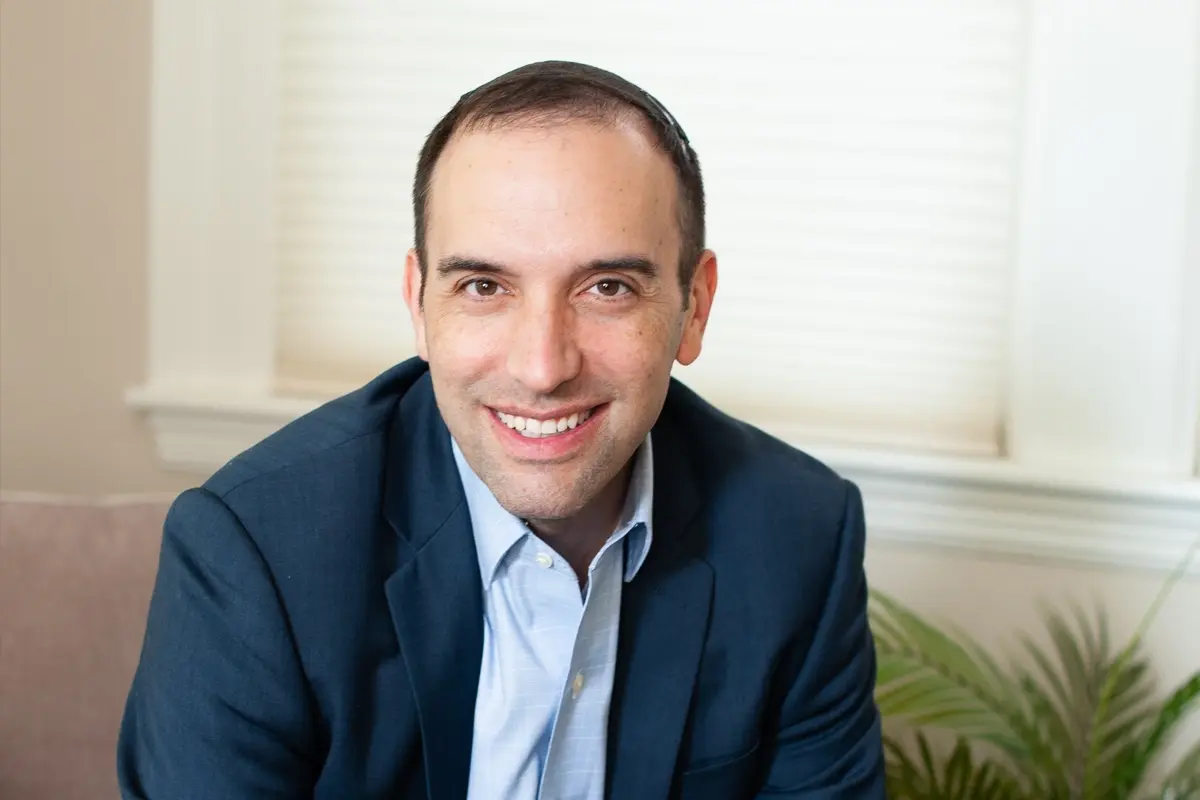
As President and CEO of Combined Jewish Philanthropies of Greater Boston (CJP), Marc leads the organization in its mission to inspire Jewish life and ignite positive change in Greater Boston, in Israel, and across the globe. He champions CJP’s efforts to build partnerships, develop resources, mobilize volunteers, and put innovative philanthropy into practice. Marc regularly writes, speaks, and teaches about leadership, community, and civic life, bringing the voice of Jewish tradition to contemporary issues. Marc graduated from Yale University in 1997 with a Bachelor of Arts in religious studies and received his Master’s in Jewish education from The Hebrew University in 2002. Before coming to CJP, Marc served as head of school at Gann Academy in Waltham. Born in Lynnfield, Marc currently resides in Brookline with his wife, Jill, and they have four children.
Renewal and Return: A Creative High Holidays Retreat
More Stories like this
50 facts about Jerusalem
Finding Strength in Each Other
Change Starts With Us | CJP Marc Baker
In a Moment of Urgency, CJP Mobilizes Rapid Emergency Support Across Israel